What Is Media Planning & Why Every Business Needs It

Media planning puts your ads in front of the right people, at the right time, in the right places. It connects business goals, audience behaviour, budget, and channel selection into one cohesive approach. Without media planning, advertising often becomes fragmented and reactive. With it, advertising becomes structured, intentional, and far more effective at supporting long-term growth.
In practice, media planning acts as the framework that holds all advertising activity together. It keeps decisions connected and spending focused. This structure becomes increasingly important as businesses expand across more media channels and face greater competition for attention.
For modern brands, media planning for businesses is not about being everywhere at once. It ensures each channel plays a defined role within the overall strategy.
This clarity helps businesses avoid spreading budgets too thin or relying on trends that may not suit their audience. Instead, media planning focuses on relevance, consistency, and purpose, allowing brands to scale their visibility without losing focus.
In a competitive market where attention is limited, simply being visible is not enough. Media planning helps businesses use advertising more effectively and gain a clear competitive advantage.
Planned advertising helps businesses grow over time, not just spend money.
Media Planning Sets the Direction for Advertising
At its foundation, media planning begins with understanding the target audience and defining clear objectives. Before choosing placements, businesses need clarity on who they want to reach and what outcome they are aiming for.
This early stage shapes every decision that follows. The goal guides channel choice and measurement. Without this direction, advertising activity can feel busy without being effective.
From there, media planning selects the right channels and defines how they work together. This is where the distinction between media planning vs media buying becomes essential. Media planning establishes the strategy and direction, while media buying strategy focuses on executing that plan through placements and negotiations. When planning is weak or rushed, buying becomes inefficient and disconnected from outcomes.
This separation of roles is critical for performance. A strong plan sets clear direction and buying puts it into action. A strong plan keeps spending intentional. Intentional spending allows businesses to invest in channels that support long-term growth rather than short-term visibility. It also provides a benchmark for reviewing performance and refining future campaigns.
How Media Channels Work Together
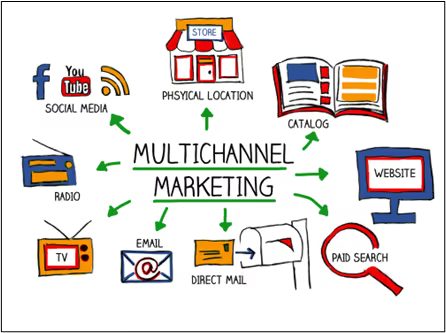
Once the direction is clear, media planning makes sure all channels work together. Advertising does not work in silos. Awareness, consideration, and action are connected stages that rely on repetition, context, and reinforcement.
Each channel plays a different role within this journey. Some introduce the brand, others build trust, and others prompt action. Media planning makes sure each channel has a clear role.
Performance focused media planning looks at how each channel contributes to advertising reach and exposure, while supporting overall ROI. Some channels introduce the brand, others reinforce the message, and others prompt action. Clear roles help create a smoother, more effective customer journey.
This clarity helps businesses see why some channels take time to deliver results but still add value. A coordinated approach is what transforms individual placements into a system that works together. Planning channels separately leads to inconsistent results. When planned as a system, each placement supports the next, creating momentum rather than fragmentation.
Measuring ROI and Supporting Growth
Strong media planning also brings clarity to measurement. Rather than focusing only on immediate outcomes, it considers how exposure, frequency, and consistency influence behaviour over time.
This broader view helps businesses understand the cumulative impact of advertising, especially for channels that support awareness and consideration.
By clearly defining the role of each channel, businesses can assess ROI more accurately and optimise spend with confidence. This structured approach protects budgets from misuse and ensures advertising activity supports sustainable growth rather than short-term spikes.
Clear measurement also supports better decision-making, allowing businesses to refine their media mix as goals evolve.


.webp)

We respectfully acknowledge the traditional owners of the land on which we work and learn and pay respect to the First Nations peoples and their elders, past and present, and recognise their continuous connection to Country.